
How to Read Construction Drawings: A Clear Guide for Homeowners – Construction drawings can look overwhelming at first. Sheets filled with lines, symbols, and technical notes may seem difficult to understand—but they are simply a structured way of communicating how a building will be constructed.
After more than 20 years working as a licensed architect, I’ve found that homeowners who understand the basics of construction drawings feel far more confident throughout the design and building process.
This guide breaks down how to read construction drawings into simple, understandable parts so you can read them with confidence.
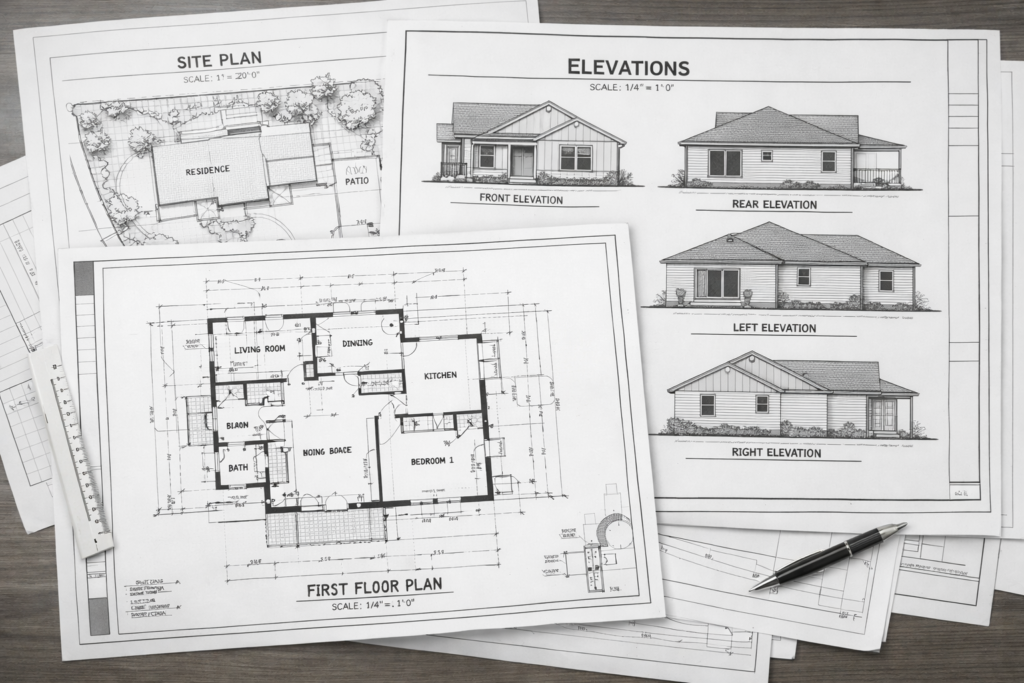
What Are Construction Drawings? – How to Read Construction Drawings
Construction drawings (also called construction documents or building plans) are detailed drawings used by contractors to build a project.
They show:
- Layout of spaces
- Dimensions and sizes
- Materials and construction methods
- Structural and system requirements
These drawings act as the instruction manual for building your home.
If you’re planning a project, these are the same types of drawings required for permits. (See: What Drawings Are Required to Get a Building Permit?)
Understanding the Drawing Set
A full set of construction drawings includes multiple sheets, each showing a different part of the building.
Common drawing types:
- Site plan
- Floor plans
- Elevations
- Sections
- Structural drawings
- Mechanical, electrical, and plumbing plans
Each sheet plays a role in explaining how the building comes together.
How to Read the Title Block
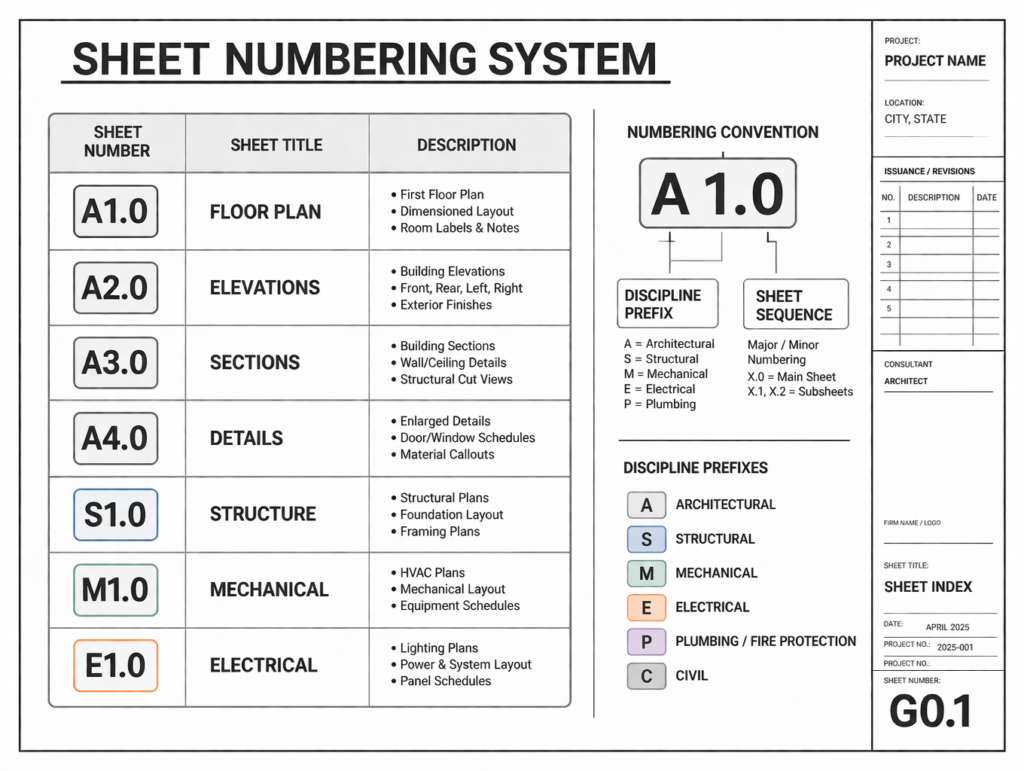
The title block is usually located in the bottom corner of each sheet.
It includes:
- Project name and address
- Drawing title
- Sheet number
- Date
- Architect or designer
Example:
- A1.0 → Floor Plan
- A2.0 → Elevations
- A3.0 → Sections
This numbering system helps organize the entire drawing set.
How to Read Floor Plans
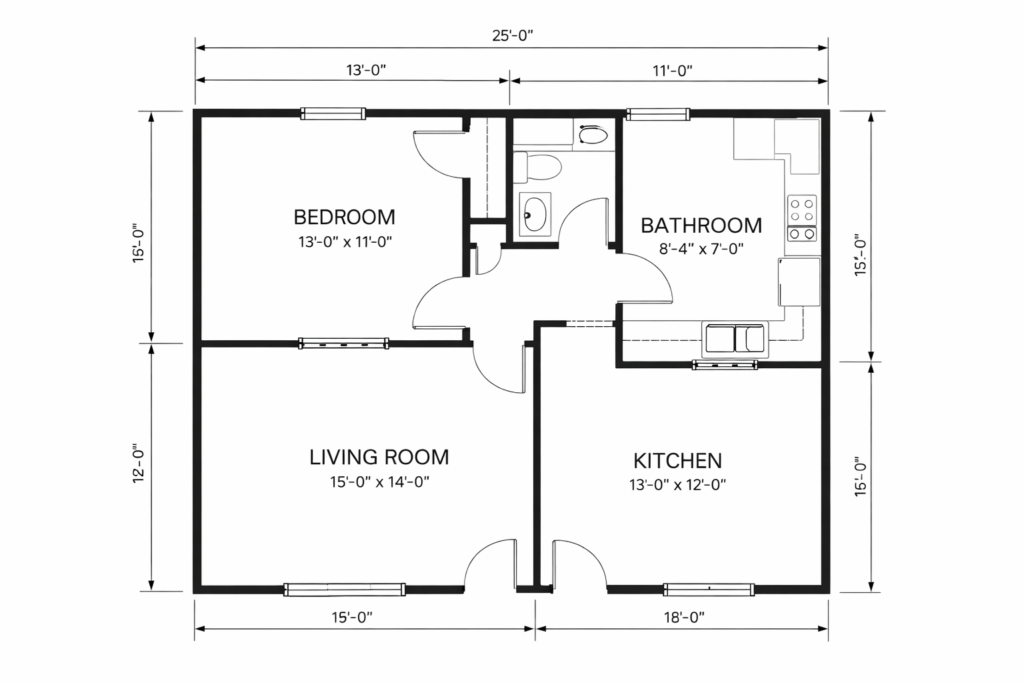
Floor plans are the most important drawings for most homeowners.
They show a top-down view of the house as if the roof were removed.
Floor plans include:
- Room layout
- Walls and openings
- Doors and windows
- Stairs
- Plumbing fixtures
They also include dimensions that define the exact size of each space.
If you’re designing your own home, understanding floor plans is essential. You may also want to read How to Design Your Own House, which explains how layouts are created.
Understanding Elevations
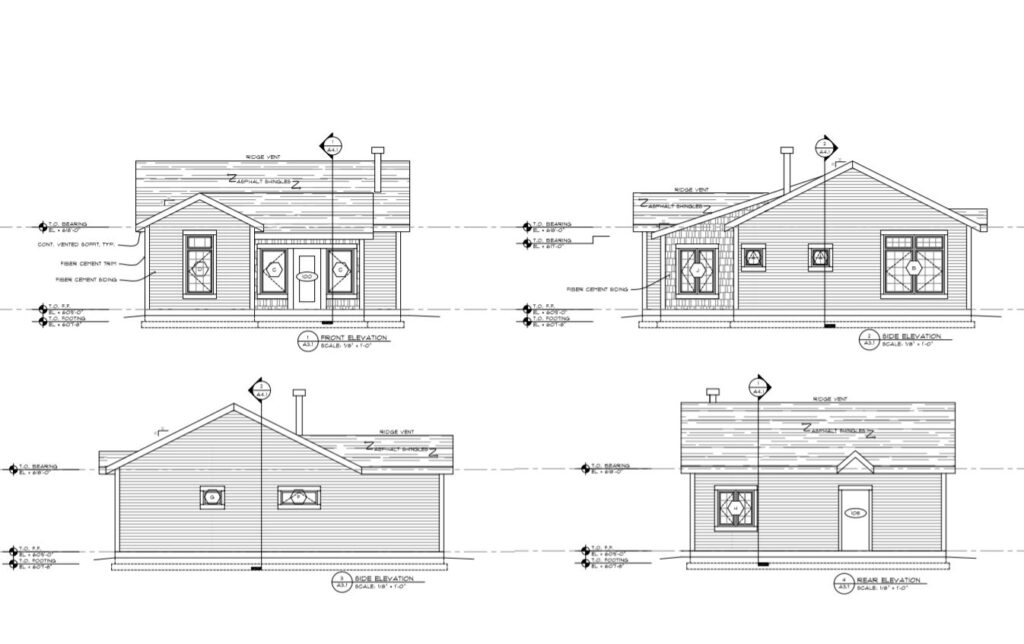
Elevations show the outside of the building from each side.
Typical elevations include:
- Front
- Rear
- Left side
- Right side
They show:
- Roof shape
- Window placement
- Exterior materials
- Building height
Elevations help you visualize what your home will look like when finished.
Reading Building Sections
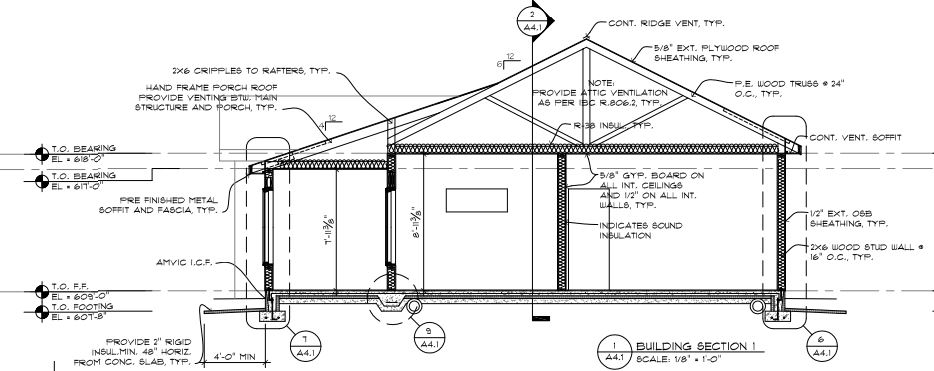
Sections are vertical cuts through the building.
They show how the structure is assembled from the foundation to the roof.
Sections include:
- Foundation depth
- Floor structure
- Wall construction
- Roof framing
- Ceiling heights
These drawings are critical for understanding how the building is physically constructed.
Dimensions and Notes
Dimensions tell you the exact size and location of elements in the drawing.
You’ll see:
- Wall lengths
- Room sizes
- Door openings
- Window spacing
Notes provide additional instructions about materials and construction methods.
Together, dimensions and notes ensure that the design is built accurately.
Common Symbols and Abbreviations
Construction drawings use standard symbols and abbreviations to save space.
Examples include:
- CL = Centerline
- AFF = Above Finished Floor
- TYP = Typical
There are also symbols for:
- Doors
- Windows
- Electrical outlets
- Plumbing fixtures
Understanding these symbols makes drawings much easier to read.
Why Understanding Drawings Matters
You don’t need to read construction drawings like a professional, but understanding the basics can help you:
- Follow your project more confidently
- Communicate better with your architect or builder
- Identify potential issues early
- Understand how your home is being built
Clear drawings also help contractors provide accurate pricing. If you’re planning a project, it’s helpful to understand how much it costs to build a house, since drawings directly impact cost.
Avoiding Common Mistakes
Many construction issues begin with design misunderstandings.
When homeowners don’t fully understand drawings, it can lead to:
- Miscommunication
- Unexpected costs
- Layout issues
To avoid these problems, it helps to understand some of the 10 common mistakes to avoid when designing a house, especially those related to layout and planning.
Final Thoughts
Construction drawings are one of the most important tools in any building project. They communicate design intent, construction methods, and technical requirements to everyone involved.
While they may seem complex at first, learning how to read them gives you a clearer understanding of your project and helps you stay informed throughout the process.
With a basic understanding of construction drawings, you’ll be better prepared to make decisions, ask questions, and ensure your home is built exactly as intended.